The EPFO invites you to the Nidhi Aapke Nikat 2.0 Camp—a one-stop platform for employees, employers, and pensioners to resolve queries and access personalised assistance.
✅ Key Benefits:
👨💼For Employees: Quick solutions for PF, UAN, withdrawals, and KYC updates.
🏢 For Employers: Guidance on compliance procedures and grievance resolution.
👴 For Pensioners: Special Pension Help Desk for PPO, arrears, and life certificate submission.
🤝 Why Attend? Interact directly with EPFO officials, gain clarity on schemes, and resolve issues instantly! Spread the word and make the most of this opportunity!
As the General Election to the Legislative Assembly of NCT of Delhi approaches, it’s crucial for employers and employees to stay informed about their rights and responsibilities. Mark your calendars for 5th February 2025 (Wednesday)—a day dedicated to democracy and your right to vote!
🔍 What Does the Law Say?
The Election Commission of India (ECI), under Section 135B of the Representation of the People Act, 1951, mandates that all employers provide a paid holiday to their employees on the day of polling. This directive ensures that every eligible voter has the opportunity to participate in shaping the future of the state.
✅ Who Is Covered?
The paid holiday applies to employees working in:
Factories 🏭
Shops and commercial establishments 🏢
Private offices and institutions 👩💻👨💼
Note: Exceptions may apply to essential services, but arrangements must be made to allow employees to vote.
📋 Employer Responsibilities
Employers are required to:
Grant a Paid Holiday: Ensure employees are not penalized for taking time off to vote. 💰
Public Notification: Notify employees about the holiday at least three days before the poll date. 🗓️
Compliance with the Law: Non-compliance may attract legal penalties. ⚖️
🌟 Why Voting Matters?
Voting is not just a right but a responsibility. By casting your vote, you contribute to the democratic process and help shape policies that impact your life and the future of the state. A high voter turnout strengthens democracy and ensures fair representation.
📣 How Employers Can Spread Awareness
To ensure compliance and encourage participation, employers can:
Publish Public Notices in their workplace.
Share information through emails or internal communications. 📧
Display notices on their websites and social media channels. 🌐
🔔 Important Dates to Remember
Polling Day: 5th February 2025 (Wednesday)
Deadline for Notification: At least 3 days before polling day.
🌐 Stay Informed
For updates, visit the Labour Department’s website or check announcements in leading newspapers. Ensure your workplace complies with the directive and empowers employees to fulfill their democratic duty.
📢 Key Takeaway
Employers, ensure a paid holiday for your employees on polling day. Employees, take this opportunity to cast your vote and make your voice heard. Together, let’s contribute to a stronger, more inclusive democracy.
The Labour Department of Tripura has issued a notification dated 12th December 2024, announcing the revised minimum wage rates applicable to workers employed in various industries across the state. These changes include updates to the Variable Dearness Allowance (VDA) and apply retrospectively from 1st October 2024. This revision is crucial for businesses and workers to ensure compliance and fair compensation.
Industries Covered Under the Notification
The revised minimum wage rates are applicable to employees/workers engaged in the following sectors:
Shops and Establishments
Agriculture
Auto-Rickshaw Operations
Beedi Industry
Construction and Maintenance of Roads or Buildings
Cooperative Stores and Societies
Goldsmith Sector
Hotels and Restaurants
Incense Stick Manufacturing
Mechanical Workshops
Petrol Pumps
Private Security Guards
Private Teaching Institutions
Public Motor Transport Services
Rubber Plantations
Safai Karamchari (Sanitation Workers)
Stone Breaking, Loading, and Unloading Activities
Highlights of the Revised Wages
Variable Dearness Allowance (VDA): The VDA has been revised for all covered sectors, reflecting the changes in the cost of living index.
Overtime Provisions: Employees working beyond prescribed hours are entitled to overtime wages as per the revised rates.
Classification of Labour: Workers have been classified into three categories with separate wage rates:
Unskilled Labour
Semi-Skilled Labour
Skilled Labour
Significance for Employers and Employees
For Employers: Ensuring compliance with these revised rates is mandatory to avoid penalties under labour laws.
For Employees: Workers will benefit from fair compensation aligned with inflation and market standards.
Compliance Requirements
Employers in the listed industries are advised to update their payroll systems and wage structures in accordance with the revised rates. Documentation for overtime pay and labour classification should be maintained to meet statutory requirements.
Why It Matters?
The revision ensures that the workforce in Tripura is fairly compensated, reflecting the economic changes and cost of living adjustments. It also promotes a transparent and just wage system across the state.
For a detailed breakdown of the revised wage rates and classifications, refer to the attached notification.
Mandatory Registration of Migrant Workers on Tamil Nadu Labour Department’s ISM Portal
The Tamil Nadu Labour Department has taken a significant step toward ensuring the welfare of interstate migrant workers by mandating their registration on the Interstate Migrant Workers (ISM) Portal. This initiative applies to all factories and establishments employing migrant workers, whether directly or through contractors. Employers must comply with this directive to avoid legal penalties and contribute to a transparent system for worker welfare.
This article explains the registration process, compliance requirements, and benefits for employers in Tamil Nadu.
Tamil Nadu Labour Department’s ISM Portal
The ISM Portal is an initiative by the Tamil Nadu Labour Department to create a comprehensive database of interstate migrant workers. This system facilitates:
Transparent monitoring of worker details.
Effective implementation of welfare measures.
Prevention of exploitation and legal violations.
Who Must Register Migrant Workers?
Applicability:
Employers in Tamil Nadu hiring interstate migrant workers for permanent, temporary, contractual, or casual work.
Both directly employed workers and those hired through contractors must be registered.
Key Deadline for Compliance
The Tamil Nadu Labour Department has set 26th December 2024 as the deadline for completing the registration of all migrant workers on the ISM Portal.
Log In or Register: Create an employer account if you are a first-time user.
Enter Worker Details: Provide the Aadhaar number and phone number for each worker.
Submit Details: Save and submit the data for each worker.
Update Status Regularly: Mark workers as “Active” or “Inactive” based on their current employment status.
Post-Registration Reporting
Once the registration process is completed, employers must:
Take a screenshot of their dashboard showing the updated worker details.
Email the screenshot to ddishcbe1@gmail.com along with:
Factory Registration Number (e.g., CBEXXXXX).
Number of workers already registered.
Number of workers registered in the latest update.
Key Clarifications from Tamil Nadu Labour Department
No Fees Involved: There are no charges for registering migrant workers on the ISM Portal.
Separate Requirement: This portal registration is distinct from the Migrant Workers Registration Certificate issued by the Labour Department.
Short-Term Employment: Even workers employed for a single day must be registered. Deactivation can be done when they leave.
Inclusive of Contractors’ Workers: All workers hired through contractors must also be registered.
Benefits of Registration for Employers
Legal Compliance: Ensures that your organisation adheres to Tamil Nadu Labour Department regulations.
Enhanced Reputation: Demonstrates your commitment to transparency and worker welfare.
Avoidance of Penalties: Compliance with ISM Portal rules prevents legal actions by DISH squads.
Government Support for Employers
The Tamil Nadu Labour Department provides a detailed manual to guide employers through the registration process. Employers facing technical challenges can contact the department for prompt assistance via WhatsApp or email.
Conclusion
The Tamil Nadu Labour Department’s ISM Portal is a vital tool for improving the welfare of interstate migrant workers and ensuring compliance with labour laws. Employers must act swiftly to meet the 26th December 2024 deadline and contribute to this significant initiative.
If you need professional assistance or further clarifications, feel free to reach out. Compliance is not just an obligation—it’s a step toward creating a fair and inclusive work environment in Tamil Nadu
The Labour Department of the Government of West Bengal has announced a revision in contribution rates under the West Bengal Labour Welfare Fund (WBLWF). This update, effective from January 1, 2024, is aimed at enhancing employee welfare.Key Highlights
Key HighlightsEmployers’ Contribution:
Revised to ₹30 per employee, applicable to all employees listed in establishment registers.
Payment Schedule:
Contributions are to be paid twice a year, for periods ending:June 30December 31
Implementation:
The new rates will apply from January 1, 2024, beginning with the period ending June 30, 2024.
Compliance Tips:-
Update payroll systems to reflect the new contribution rates.
Ensure timely biannual payments to avoid penalties.
Maintain accurate employee records for smooth compliance.
This revision underscores the government’s commitment to employee welfare and employer accountability.
The Employees’ State Insurance Corporation (ESIC) has introduced an efficient and user-friendly provision for bulk Aadhaar seeding of ESIC beneficiaries. Employers can now upload Aadhaar details in bulk through the ESIC Employer Portal, ensuring seamless Aadhaar verification and compliance.
This article provides a step-by-step guide, highlights the benefits, and addresses common issues, helping employers implement the process effectively.
What is Bulk Aadhaar Seeding in ESIC?
Bulk Aadhaar seeding allows employers to upload multiple Aadhaar records of beneficiaries in one go through the ESIC Employer Portal. This system simplifies the Aadhaar verification process, ensuring faster and accurate delivery of ESIC benefits.
Key Features of the Bulk Aadhaar Seeding Process
Bulk Upload via CSV Files
Employers can upload up to 4 Excel files (CSV format) per day.
Each file supports 250 Aadhaar records, making it a time-saving solution.
Multiple Verification Methods
Aadhaar can be seeded using:
OTP Authentication
Biometric Verification
Face Authentication
Automated Error Handling
Failed records due to mismatches will be automatically included in subsequent uploads after 24 hours.
User Manual for Guidance
A detailed User Manual is available on the ESIC Portal since 06.12.2023 to assist employers.
Why Aadhaar Seeding is Important for ESIC Beneficiaries
Aadhaar seeding is essential to: ✅ Verify Beneficiary Identity: Ensures accurate identification and eliminates duplicates. ✅ Streamline Benefits: Enhances the efficiency of ESIC benefit delivery, including medical care, cash benefits, and maternity leave. ✅ Ensure Compliance: Aligns with the eKYC requirements under ESIC regulations. ✅ Simplify Processes: Reduces manual submissions and data errors.
Step-by-Step Guide for Bulk Aadhaar Seeding
Follow these simple steps to seed Aadhaar details of beneficiaries:
Download the User Manual
Visit the ESIC Employer Portal and download the detailed User Manual.
Prepare the Aadhaar Data
Fill the required details (Aadhaar number, mobile number) in the CSV template provided.
Ensure data accuracy to avoid rejections.
Upload Aadhaar Data
Log in to the ESIC Employer Portal.
Navigate to the Bulk Aadhaar Seeding section.
Upload the completed CSV file (maximum 250 records per file).
Check Upload Status
Verify the upload status after 48 hours.
Failed records will be reprocessed automatically in subsequent uploads.
Address Errors
Resolve issues like demographic mismatches through the “Update Employee Details” workflow.
Reference to Earlier Circulars
The current update is part of ongoing improvements communicated earlier via circulars issued on:
📅 20.06.2023
📅 17.07.2023
📅 20.07.2023
📅 04.10.2023
📅 10.01.2024
The bulk Aadhaar seeding provision was introduced on 06.08.2024, enhancing the feature to allow multiple uploads per day.
Common Issues and Solutions for Bulk Aadhaar Seeding
Issue
Solution
Demographic Mismatch
Update beneficiary details via “Update Employee Details” workflow.
Invalid Aadhaar/Mobile Number
Verify and re-upload correct Aadhaar and mobile numbers.
Opt-Out Status
Beneficiaries can opt out, but Aadhaar is recommended for better services.
Benefits of Bulk Aadhaar Seeding for Employers
Benefit
Details
Saves Time
Upload Aadhaar data in bulk instead of manual submissions.
Automatically includes failed records in future uploads.
Streamlined Services
Ensures timely delivery of ESIC benefits for beneficiaries and employees.
Employer Responsibilities
Employers are encouraged to:
Guide employees/beneficiaries for timely Aadhaar uploads.
Regularly monitor upload reports for errors.
Ensure data accuracy to prevent delays in Aadhaar seeding.
Publicize the importance of Aadhaar seeding to employees for uninterrupted access to ESIC benefits.
Conclusion
The bulk Aadhaar seeding feature introduced by ESIC is a game-changer for employers and beneficiaries. By simplifying the Aadhaar upload process, ESIC ensures faster verification, improved accuracy, and enhanced benefit delivery.
Employers should proactively adopt this system to meet compliance requirements and ensure seamless services for their employees.
Call to Action
👉 Download the User Manual here to get started.
👉 Start seeding Aadhaar details today to ensure timely compliance and uninterrupted ESIC services!
Stay updated with ESIC guidelines and simplify your compliance journey.
The Jammu and Kashmir and Ladakh High Court has issued a significant judgment concerning the limitation period for filing complaints under the Sexual Harassment of Women at Workplace (Prevention, Prohibition, and Redressal) Act, 2013 (POSH Act).
In the case of Mohammad Altaf Bhat Vs. Principal Chief of Commissioner and Ors., the Court ruled that complaints must be filed within three months of the alleged incident as mandated by Section 9(1) of the POSH Act. An extension of an additional three months is permissible only if valid reasons are recorded by the Internal Complaints Committee (ICC).
The Court observed that complaints filed beyond this condonable period without proper justification are beyond the jurisdiction of the ICC. The ruling further emphasized that statutory authorities must adhere to procedural safeguards and natural justice principles during inquiries.
Case Highlights:
Incident Date: April 25, 2016.
Complaint Filed: October 16, 2017 (well beyond the permissible period).Court’s Decision:
The ICC’s proceedings were quashed due to the failure to record reasons for condoning the delay.
This judgment reinforces the importance of:
Timely Filing of Complaints: Employers and employees must ensure compliance with the strict timelines under the POSH Act.Procedural Safeguards: Authorities must record valid reasons for any delay to uphold the credibility and jurisdiction of their actions.Fair Inquiry: Natural justice principles must be upheld during all proceedings.
💡 Takeaway for Employers & ICCs:
Ensure robust processes are in place for handling complaints within the prescribed timelines. Non-compliance with these statutory requirements could result in legal challenges and the invalidation of ICC decisions.
For a detailed analysis of this judgment, read here:👇
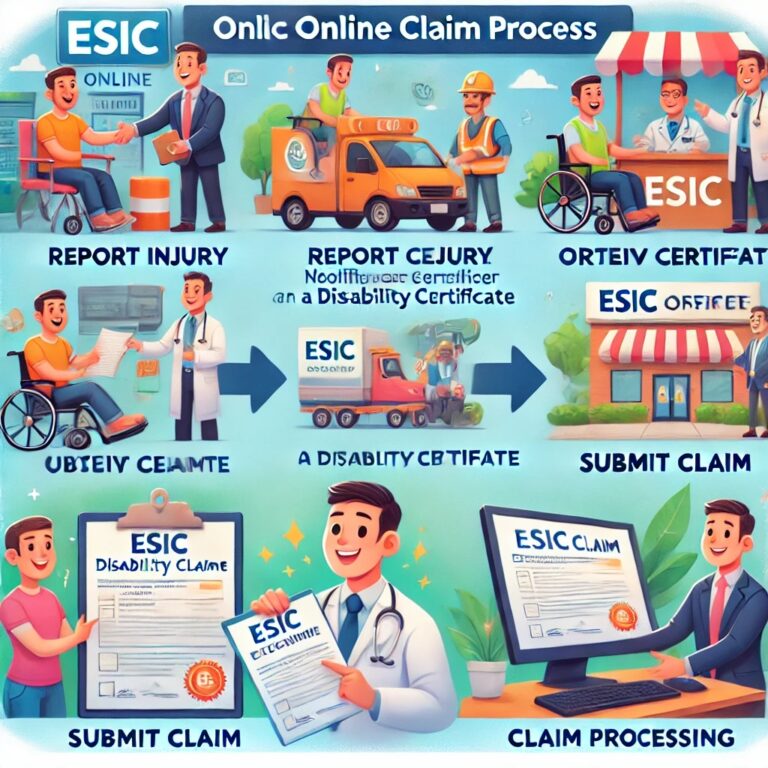
📢 Disability BenefitsIf you or someone you know has suffered a workplace injury, follow these simple steps to claim disability benefits under the Employees’ State Insurance Corporation (ESIC):
1️⃣ Report the Injury:Inform your employer and get immediate treatment at an ESIC-approved hospital.
2️⃣ Obtain a Disability Certificate:Consult an ESIC doctor and secure a permanent disability certificate after evaluation.
3️⃣ Submit Your Claim:Fill out Form 14 and submit it along with the disability certificate to your nearest ESIC office.
4️⃣ Claim Processing:Your claim will be processed, and the approved benefit will be disbursed directly to you.💡 For detailed information, visit www.esic.gov.in or contact your local ESIC office.Stay informed and secure your benefits under the ESIC scheme.
The Hon’ble Supreme Court, in the case of Aureliano Fernandes v. State of Goa and Ors, has issued detailed directives to ensure robust compliance with the Sexual Harassment of Women at Workplace (Prevention, Prohibition, and Redressal) Act, 2013 (POSH Act) across India.
📜 Key Details of the Judgment:
1️⃣ Uniform Implementation Nationwide:The Court directed all States and UTs to implement the Act uniformly and strictly.
2️⃣ Mandatory Committees:✔️ District Officers to be appointed by December 31, 2024.✔️ Local Complaints Committees (LCCs) to be formed by January 31, 2025.✔️ Internal Complaints Committees (ICCs) mandatory in all workplaces, including government departments, PSUs, and private organizations.
3️⃣ Enhanced Grievance Mechanisms:✔️ Creation of SheBox portals to facilitate complaint registration.✔️ Upload of ICC, LCC, and nodal officer details on SheBox.
4️⃣ Private Sector Accountability:
✔️ Engage with private sector employers to ensure ICC compliance.
✔️ Deputy Commissioners/District Magistrates to survey organizations for compliance and report under Section 26 of the POSH Act.🗓 Compliance Deadlines:
🔹 December 31, 2024: Appointment of District Officers.
🔹 January 31, 2025: Formation of LCCs.
🔹 March 31, 2025: Full compliance deadline.
The Court emphasized that the POSH Act will succeed only with strict adherence by all stakeholders, ensuring dignity and safety for women at workplaces nationwide.Stay tuned for further updates on compliance requirements and implementation steps!
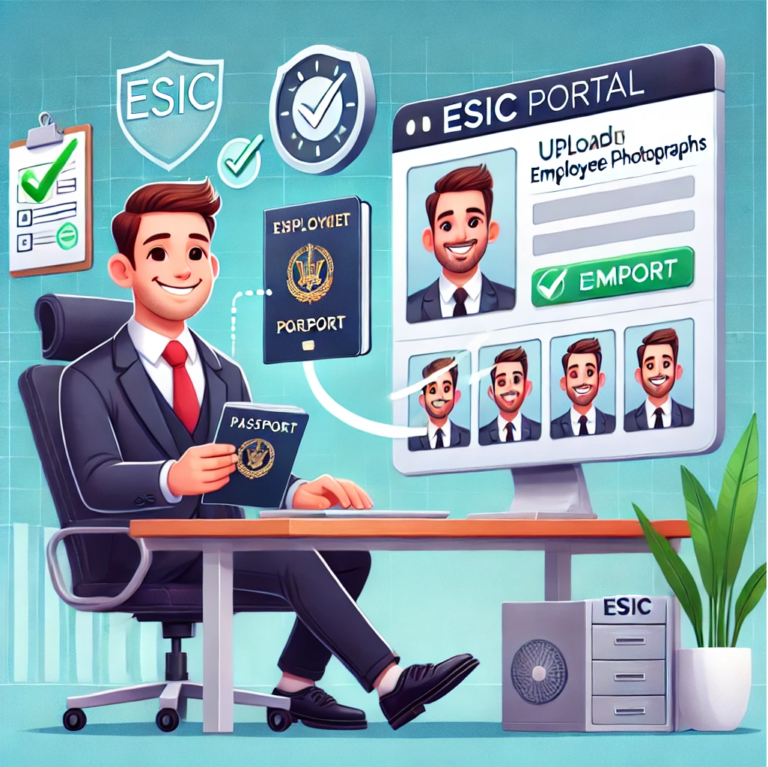
ESIC Mandates Employee Photo Uploads: A Step-by-Step Compliance Guide
The Employees’ State Insurance Corporation (ESIC) has introduced a new requirement for employers to upload individual photographs of their insured employees on the ESIC portal. This mandatory update is crucial for the registration and updating of employee records. By adhering to this directive, employers can ensure smoother benefit processing and regulatory compliance. Let’s explore this update in detail.
Why Has ESIC Introduced This Requirement?
The ESIC aims to:
Enhance Record Accuracy: Ensuring employee records are updated and error-free.
Improve Identification: Facilitating quick verification of insured individuals.
Streamline Benefit Disbursement: Reducing delays caused by incomplete or inaccurate employee profiles.
By mandating photo uploads, ESIC seeks to strengthen its operational efficiency and ensure insured employees receive timely benefits.
Photo Specifications for ESIC Compliance
Employers must ensure that employee photographs meet the following specifications:
File Size: Between 50 KB and 100 KB.
Format: JPEG.
Photographs that do not meet these requirements may be rejected. Use photo editing tools to resize or reformat images if necessary.
How to Upload Employee Photos to the ESIC Portal: A Step-by-Step Guide
Follow these steps to comply with the new ESIC mandate:
Collect Recent Photographs Request updated passport-sized photographs from all insured employees.
Verify Photograph Specifications Ensure all photographs meet the file size (50–100 KB) and format (JPEG) requirements. Use tools like ILoveIMG or photo editing software for resizing and formatting.
Log in to the ESIC Portal Access your employer account on the ESIC portal.
Select Employee Profile Navigate to the employee records section and choose the profile you wish to update.
Upload the Photograph Use the upload feature to add the employee’s photograph to their record.
Save the Updated Record Confirm the upload and save the changes.
Benefits of Compliance with the ESIC Photo Upload Mandate
Streamlined Records Accurate and updated records simplify claim processing and reduce administrative errors.
Regulatory Compliance Avoid penalties or disruptions by meeting the ESIC requirements.
Employee Trust Demonstrates a commitment to ensuring employees’ social security benefits are managed effectively.
Challenges Employers May Face and Solutions
Large Workforces For companies with many employees, appoint a dedicated team or utilize bulk upload features if available.
Technical Issues with Photograph Specifications Use free online tools or seek professional assistance to resize or reformat images.
Delays from Employees Set internal deadlines and communicate the importance of timely submission to employees.
Frequently Asked Questions (FAQs)
Q1. Is the photo upload mandatory for all insured employees? Yes, it is required for all employees covered under the ESIC scheme.
Q2. Can we upload group photographs? No, only individual passport-sized photographs are acceptable.
Q3. What happens if an employer fails to upload the photographs? Non-compliance could result in delays in benefit processing or penalties during audits.
Q4. How can I ensure the photograph meets the file size and format requirements? Use free online tools like ILoveIMG to resize or convert images to the JPEG format.
Key Takeaways
Employers must act promptly to comply with the ESIC photo upload requirement. By doing so, you not only align with ESIC regulations but also ensure a smoother process for accessing employee benefits.